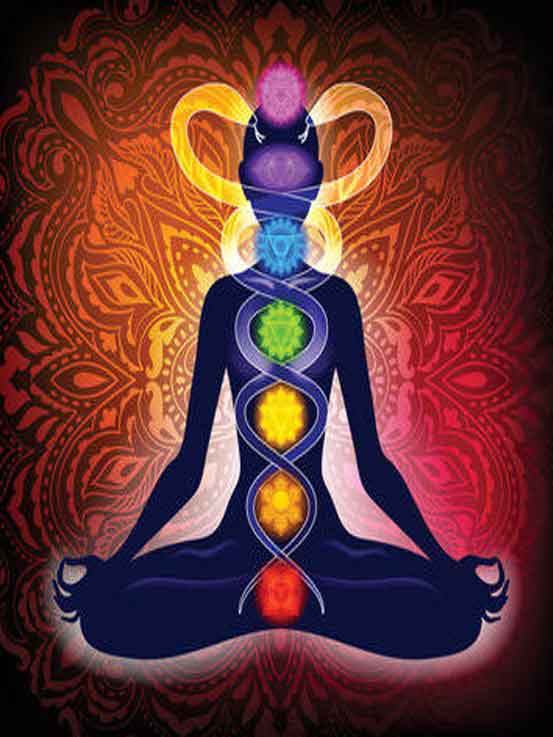
What are Chakras?
The chakra forms an integral part of the yoga and holistic health practice, in which it helps to ensure balance in the synchronization between the body, mind, and soul. Those people who wish to delve into the realm of yoga should make it a point to familiarize themselves with chakras because it is through this that they will be able to understand themselves better. The importance of the chakra cannot be understated in ancient Indian culture.
Key Characteristics:
Location: The seven main chakras run along your spine.
Function: Each governs a specific body system and life areas.
Balance: When open and balanced, energy flows freely.
Blockages: When blocked, you may experience physical or emotional symptoms.
Colors: Each chakra is associated with a specific color and vibration.
Origins and History
The concept of chakras originates in ancient Indian philosophy, first mentioned in the Vedas as centers of energy in the body linked to both physical health and spiritual growth. Over time, Hindu and Buddhist texts, particularly the Upanishads and the Yoga Sutras of Patanjali, expanded on this idea and connected chakras with meditation and spiritual growth.
By the Tantric period, the chakras were more fully described as wheels or lotuses along the spine, each associated with specific sounds, deities, colors, and elements.
The 7 Chakra System
1. Root Chakra (Muladhara)
Location: Base of the spine
Color: Red
Element: Earth
Root Chakra symbolizes stability, security, and grounding. It acts as the basis of all physical and emotional stability.
Balanced:
Feeling confident and secure
Feeling emotionally stable
Grounded in the current moment
Imbalanced-
Experiencing fear and anxiety
Insecurity becomes more pronounced
Lack of confidence becomes evident
2. Sacral Chakra (Svadhisthana)
Location: Lower abdomen
Colour: Orange
Element: Water
Functions of the Sacral Chakra: Creativity, sexuality, emotion, and relationships.
Balanced:
Enhanced creativity
Proper handling of emotions
Good communication and relationship-building skills
Imbalanced-:
Mood swings
Decreased creativity
Inability to express emotions
3. The Solar Plexus Chakra (Manipura)
Location: Upper abdomen
Colour: Yellow
Element: Fire
Confidence, power, and respect are some of the major functions of the Solar Plexus Chakra.
Balanced-
Increased confidence
Motivation within the body
Positivity towards the body image
Imbalanced-
Low self-respect
Uncertainty
Powerlessness
4. Heart Chakra (Anahata)
Position: Center of the chest
Color: Green
Element: Air
Heart Chakra is representative of love, compassion, forgiveness, and emotional healing.
Balanced:
Positive relationship building
Emotional availability
Empathy and compassion
Imbalanced:
Painful emotions
Difficulty trusting people
Withdrawal from intimacy
5. Throat Chakra (Vishuddha)
Position: In the neck
Color: Blue
Element: Ether
The throat chakra is linked to communication and self-expression.
Balanced:
Effective communication skills
Confident talking ability
Honest self-expression
Imbalanced:
Fear of speaking
Poor communication skills
Repressed emotions
6. Third Eye Chakra (Ajna)
Position: On the forehead
Colour: Indigo
Element: Light
The Third Eye Chakra is connected to intuition, wisdom, and awareness.
Balanced:
Improved intuition
Clarity of mind
Effective decision-making skills
Imbalanced:
Confused thinking
Difficulty concentrating
Intuition disbelief
7. Crown Chakra (Sahasrara)
Location: Crown of the head
Colour: Violet or White
Element: Cosmic Energy
The Crown Chakra is all about enlightenment, awareness, and being connected with the universe.
Balanced:
Inner peace
Connection with the Spirit
Enlightenment
Imbalanced:
Chaos in mind
Feeling disconnected with the Spirit
Loss of meaning
How to Balance Your Chakras
Every chakra rotates at a specific frequency and speed. This frequency and speed can change due to various factors like diet, lifestyle, thought patterns, etc.
There is no one single method to unblock your chakras, but rather several. The best way to unblock your chakras will be different for everyone, and it’s a matter of trial and error to find out which method works for you. Here are a few popular tools and techniques for chakra cleansing and balancing:
1. Diet
One of the main reasons for an imbalance in the chakras is an imbalance of the five elements in the body. A balanced diet helps to bring balance to the elements of the body.
2. Asanas
Asanas help to stimulate the chakras and improve their functioning. They also clear the way for the chakras to heal themselves.
3. Breathing
Breathing helps to increase the flow of prana in the body and removes the stale prana.
4. Meditation
Many practitioners perform meditation to unblock chakras. Chakra meditation calms the mind and helps the practitioner focus energy towards a problematic point in the chakra system.
5. Mudras
Chakra Mudras are hand gestures typically performed in yoga and meditation to focus energy where it's needed most. To balance the chakras, we balance the element in the body by performing the corresponding mudra.
6. Color and Mantra Therapy
Each chakra resonates with a specific color and seed mantra (beej mantra). Visualizing the associated color during meditation, or chanting the mantra aloud, can help restore the chakra's natural frequency.
The 7 chakras are not abstract concepts; they are a practical map for understanding why you feel the way you do, physically and emotionally. Regular awareness of these energy centers, even in small daily practices, builds something over time. Students who work with chakras consistently often report that the changes aren't sudden at first, but they are steady. That steadiness is the real gift of this system.
Chakras are also closely associated with yoga, meditation, pranayama, and mindfulness. In yogic philosophy, the belief is that the balance of chakras will bring about better physical well-being and spiritual enlightenment.