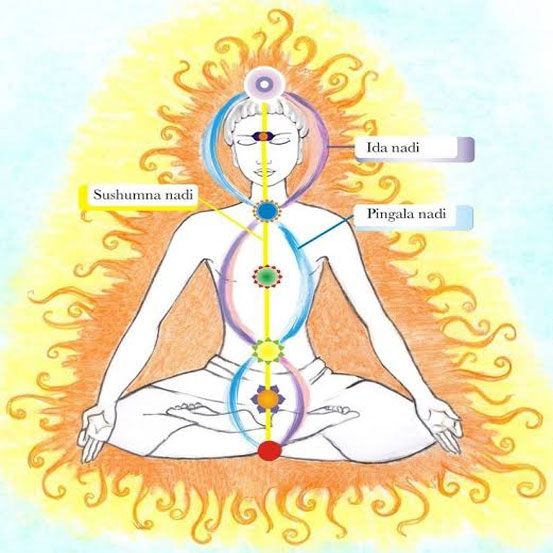
Pranayama (प्राणायाम) is the ancient yogic science of breath control and life-force expansion. Composed of Prana (प्राण — vital life force) and Ayama (आयाम — extension, expansion, control), Pranayama is the fourth limb of Patanjali’s Ashtanga Yoga and the central practice through which the Pranamaya Kosha is purified, the Nadis are cleansed, and the breath becomes the bridge between body and consciousness.
According to yoga, prana is the vital life energy. The subtle life force flows through subtle energy channels called 'nadis' and energy centers called 'chakras.' Prana has many levels of understanding, from the physical breath to the consciousness to the supreme creative power. Yogis say that the entire universe is a manifestation of prana. Our body needs prana for both our physical and subtle layers of existence. Without prana, our body cannot survive. It helps keep us alive.
What is Pranayama?
Pranayama is more than just controlling your breath. It's about increasing prana using your breath. These techniques typically involve breathing through the nostrils in a specific pattern of inhalation, breath retention, and exhalation.
When done correctly, pranayama brings harmony to the body, mind, and spirit. It makes you stronger physically, mentally, and spiritually.
Pranayama in Ancient Scriptures-
The Hatha Yoga Pradipika (Chapter 2) devotes its entire second chapter to Pranayama, declaring it the most important practice of Hatha Yoga after the Shatkarmas have purified the body. Swatmarama states: “When the breath wanders, the mind is unsteady; when the breath is still, the mind is still.” This single verse encapsulates the entire rationale for Pranayama — by mastering the breath, the yogi masters the mind.
The Patanjali Yoga Sutra (Chapter 2, Sutra 49) defines Pranayama as: “Tasmin sati shvasa prashvasayoh gati vichchhedah pranayamah” — Pranayama is the cessation (regulation) of the movement of inhalation and exhalation, and is practised after Asana has been mastered. Patanjali further describes three components: Puraka (inhalation), Rechaka (exhalation), and Kumbhaka (retention) — along with regulation by place, time, and number.
The Gheranda Samhita (Chapter 5) presents eight types of Kumbhaka (breath retention): Sahita, Surya Bheda, Ujjayi, Shitali, Bhastrika, Bhramari, Murchchha, and Kevali. Each technique has specific effects on the Doshas, the Nadis, and the states of consciousness. The text promises that through mastery of Pranayama, the practitioner attains Laghima (lightness of body) and eventually liberation itself.
Sources of Prana
One can increase their prana level by focusing on four main areas: food, rest, breath, and mindset.
There is more prana in fresh foods than canned, frozen, or leftover foods. Plant-based food is considered to have higher prana.
The amount and quality of sleep have an effect on our prana levels. And so does our meditation practice because of the deep rest gained. When the prana level is high and flows smoothly, the mind becomes calm, happy, positive, and enthusiastic. Low prana levels lead to more worry, fear, uncertainty, conflict, tension, depression, doubts, and other negative feelings.
Go deeper into breathing practices at an in-person or online course with us.